SEP: 0033
Title: Identicons for Stellar Accounts
Author: Lobstr.co, Gleb Pitsevich (@pitsevich)
Status: Active
Created: 2019-11-20
Updated: 2021-04-20
Version: 1.0.1
Discussion: https://groups.google.com/forum/#!topic/stellar-dev/kAqhpCMe96c
This SEP defines a way to generate identicons for Stellar accounts - unique
icons, based on the public key of the account.
It's a visual representation of the Stellar address, that serves to identify
the account as a form of an avatar.
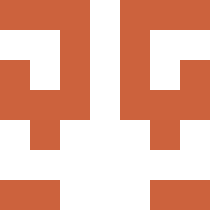
As an example, here's the identicon for this Stellar account
GALAXYVOIDAOPZTDLHILAJQKCVVFMD4IKLXLSZV5YHO7VY74IWZILUTO:
The goal is to define a standard way to generate identicons for Stellar addresses.
Having a standard algorithm and readily available tools to generate identicons would simplify the integration for the service providers. At the same time, end users would benefit from seeing the same icon for their Stellar account in different projects across the ecosystem.
Identicon for a Stellar account is an image generated based on a public key ("G...").
Identicons can be used in the interface of products built on Stellar to improve the user experience, because they:
- allow users to visually distinguish different addresses;
- may help to verify that the sending of funds is done to correct account;
- may help to visualize history of transactions or multisig configuration;
- may help to identify which account user is currently logged in with;
This SEP describes the algorithm used to generate the images and provides links to several reference implementations.
Identicons should be used only as an additional tool in the application UI, to provide more context to the user and help prevent errors. A full public address should still be visible to the user and available for verification.
The generator takes a public key ("G...") as an input.
First, the public key is converted to a sequence of bytes, in a manner
identical to the keypair.rawPublicKey() function of JS Stellar SDK. A portion
of bytes from the raw public key in the position from 2 to 16 are used for the
identicon generation (keypair.rawPublicKey().slice(2,16)), while the
remaining bytes are ignored.
The first byte of that slice is used to pick a color for the identicon.
The byte value is used to determine hue parameter in the HSV color scheme, with
the static values for saturation and value parameters. Hence, the identicon may
be colored in one of the 256 colors. Default values for saturation and
lightness parameters are 0.7 and 0.8 respectively, but developers may adjust
the resulting color scheme, for example, to match the night mode theme.
The remaining bytes are used to generate a 7x7 matrix, with a vertical symmetry, where each cell is either filled with selected color or left blank, depending on the value of individual bits in the bytes sequence.
Finally, the matrix and the color are used to generate the image for the identicon.
Please refer to the Implementations sections below for the code samples.
Here are the reference implementations of the identicon generator:
- Javascript library: https://github.com/Lobstrco/stellar-identicon-js
- npm package: https://www.npmjs.com/package/stellar-identicon-js
- Python library: https://github.com/Lobstrco/stellar-identicon-py
- Golang library: https://github.com/StellarCN/stellar-identicon-go
The recommendation is to use the default parameters (sizes and colors) for image generation for consistency purposes.
Another option to generate identicons is through the public web API at
https://id.lobstr.co/.
This service dynamically generates identicons, caches them and quickly serves
over HTTPS.
See it in action
here
or follow this link
for more details.
Good algorithm for generating identicons should have the following properties:
- the resulting images are distinct and easy to remember;
- for 2 similar public keys the resulting images are looking differently;
- different public keys should result in a different images with a sufficiently high probability;
- given a public key it should be difficult to generate another public key with the same identicon;
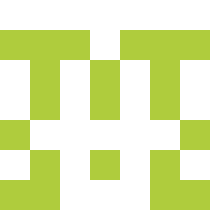
Each identicon image is a square consisting of 7x7 mono colored blocks
(pixels).
Identicons have a vertical line of symmetry, which makes it's easier to
memorize them.
Existing implementations are using PNG output format, which is efficient for images with mono colored blocks and supported on most platforms. Depending on the needs, developers may also use vector formats (like SVG) to achieve better scaling quality. The resulting images have a size of about 1KB.
Alternative implementations of identicons in other blockchain protocols:
The total number of different identicons is 256*2^(4*7)=68,719,476,736, as
the whole identicon can be colored in any of the 256 colors and the structure
can be defined by 3 left columns and a central column (due to vertical
symmetry). Each column has 7 pixels, each pixel can be in one of 2 states:
filled or empty.
However, the number of existing public keys greatly exceeds the amount of
different identicons.
So, collisions are possible - different public keys may have the same
identicon.
For most practical purposes the probability of these collisions is rather low, as there are over 68 billion possible identicons.